
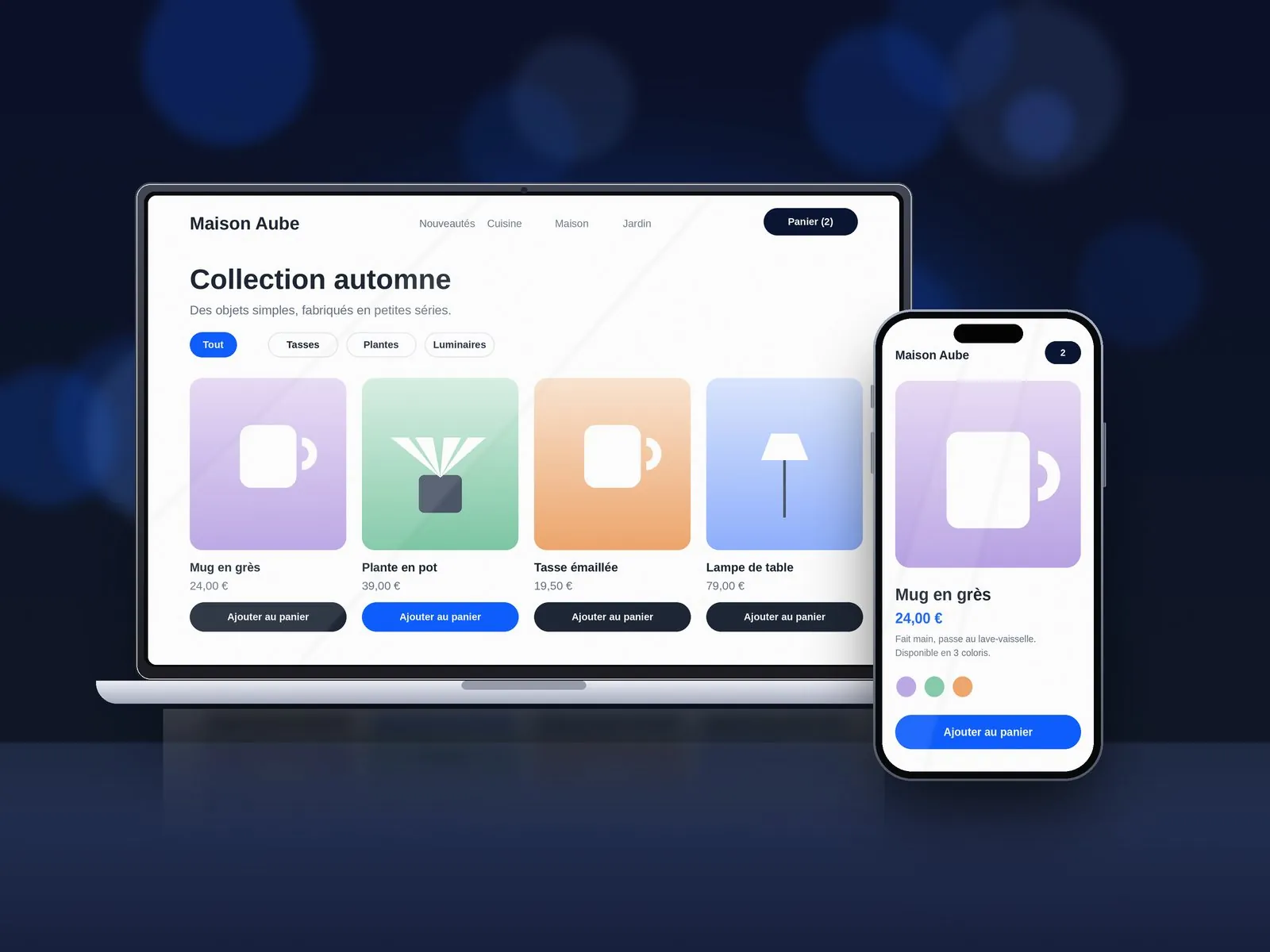
In short: building a profitable online store takes more than an attractive product grid. You need a frictionless mobile checkout, trusted payment methods, clear shipping rules, mandatory legal disclosures and order management that does not consume your evenings. Realistic SMB budgets typically start between €2,000 and €10,000 depending on catalog and integration scope.
Already selling in-store, at trade events or on third-party marketplaces and ready to launch your own direct-to-customer online shop? Here are the essential steps, compliance rules and costly mistakes to avoid.
6 steps to launch a successful online store
- Define your catalog and unit economics. Products, margins, average order value, target buyers and shipping zones.
- Pick the right technical platform. Turnkey or bespoke e-commerce: match the architecture to your SKU volume, workflow and growth plans.
- Prepare clean product data. Crisp photos, persuasive SEO descriptions, size/color variants and stock levels.
- Configure shipping & payment gateways. Carrier tiers, click & collect, free-shipping thresholds and card / digital wallet checkout.
- Run full end-to-end test orders from cart to 3D Secure payment, invoice generation and customer confirmation emails.
- Launch, measure & iterate. Track conversion funnels, cart abandonment and customer feedback.
What every high-converting online shop needs
- Clear, reassuring product pages: high-resolution visuals, concise benefits, tax-inclusive pricing and real-time stock status.
- A streamlined cart & checkout: fewer form fields mean fewer abandoned carts, especially on smartphones.
- Transparent shipping & returns policy: delivery timeframes, carrier rates and hassle-free return instructions visible upfront.
- Mobile-first shopping UX: the majority of e-commerce browsing and impulse buying happens on mobile devices.
- Effortless back-office management so your team can update products, run promotions and print packing slips in clicks.
Mandatory legal & GDPR disclosures in Europe
Before accepting your first online order, ensure your store publishes:
- complete company Legal Notice (registration details, VAT number, publisher, host);
- clear Terms & Conditions of Sale (CGV);
- consumer 14-day right of withdrawal information and return form (where applicable);
- consumer mediation contact details for B2C retail;
- a transparent GDPR Privacy Policy and compliant cookie consent banner.
Ongoing operating costs to factor in beyond the build
- Payment gateway transaction fees: small percentage + fixed fee per card or wallet transaction (e.g. Stripe, bank PSP).
- Hosting, SSL & domain renewal.
- Technical maintenance & backups: an offline checkout means lost revenue — proactive monitoring pays for itself immediately.
- Product photography & copywriting.
Practical advice: launch lean and scale with revenue
Many first e-commerce projects stall from over-engineering Version 1. Launch with your best-selling SKUs, a rock-solid mobile checkout and two reliable delivery options. Add loyalty tiers, ERP sync or advanced bundles once real order volume justifies them.
Our starting prices for online stores
Published in euros excluding VAT; your written quote locks in an exact fixed price before work begins.
- Starter: starting from 1 900 € excl. VAT, indicative timeline: 3 to 4 weeks. Up to 50 products, Secure online payment, Order management back-office.
- Complete: starting from 3 900 € excl. VAT, indicative timeline: 5 to 7 weeks. Unlimited product catalog, Shipping carriers & promo codes, Transactional order emails.
- Advanced: starting from 6 900 € excl. VAT, indicative timeline: 8 to 12 weeks. ERP / inventory sync, Custom checkout flow, Conversion & performance tracking.
Explore full details on our e-commerce store development page, read our business website pricing guide, and check our maintenance plans.
Frequently asked questions
How many products can I list on my store?
Our Starter package covers up to 50 products for a fast launch. From our Complete package upwards, products and categories are unlimited.
Can I manage products and orders myself?
Yes. You manage orders, stock and catalog updates from a clean back-office, and hands-on training is included at delivery.
Should I sell on marketplaces alongside my own online store?
Marketplaces bring discovery traffic at the cost of commissions and owning the customer relationship. Your own online store gives you 100% control over brand, margins and repeat customer data — both channels can complement each other well.
Let’s discuss your online store
Tell us about your products and goals: receive a clear, fixed-price written quote with zero obligation.